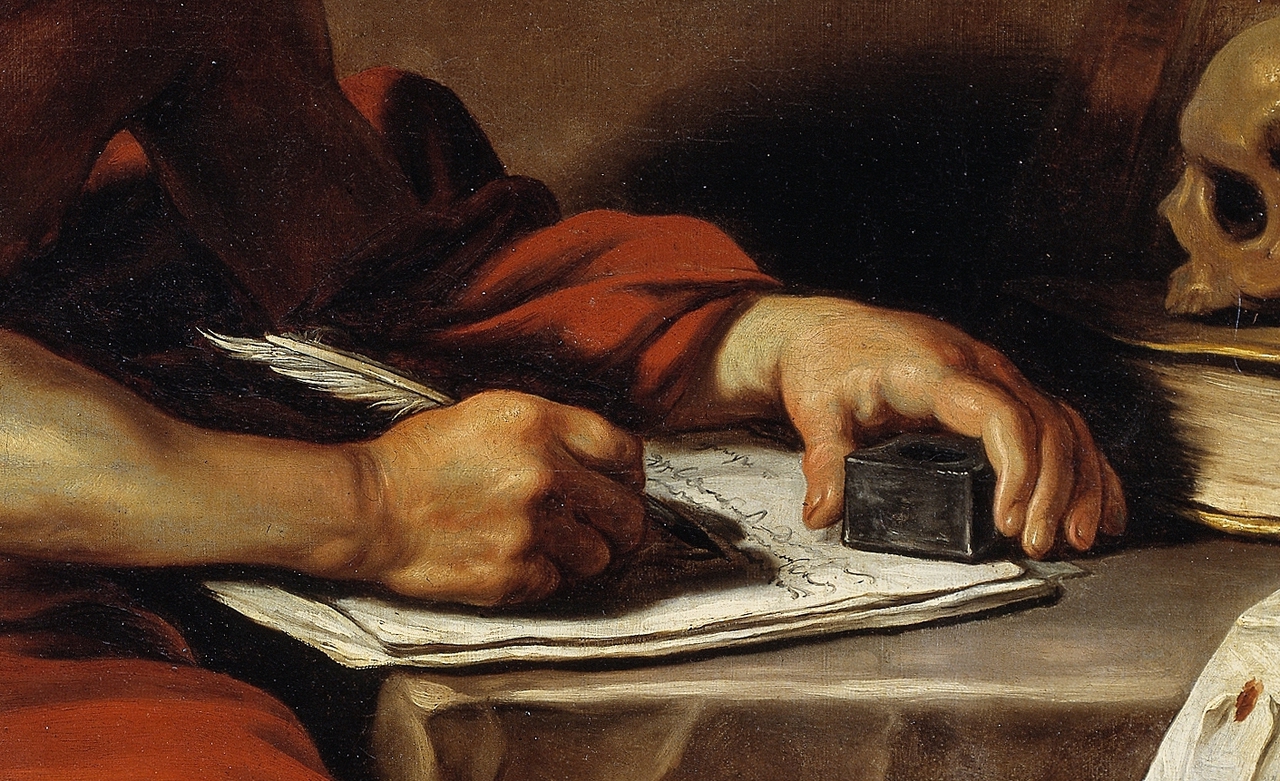
While writing, I often find myself going back to edit what I have just written: fix spelling, rework a sentence, move content around. It’s a slow process, and I can take an hour just to produce a handful of short paragraphs.
The slowness itself is not a problem. After all, if I’m going to invite people to read what I write, it’s worth taking a little time for precision and clarity. But I suspect that by editing while I write, I end up producing something worse than I might otherwise.
For one thing, although I constantly rework my writing at the sentence level, I pay far less attention to higher levels of structure. This is because once I have a draft, I have already spent considerable time getting the sentences just right, so I am much less inclined to move (or delete!) paragraphs and sections. Indeed, the paragraphs are often “just right” only for their present context, so moving around them would involve painstakingly reworking them again. Thus, the end of my essay ends up constrained by the beginning, and the run of my project is imperfectly close to what I had originally imagined. There is little space for discovery as I go, and less for things to go better than planned.
So during the early days of this pandemic, I threw together a little tool called We must go forward (source here) to help me get into the mode of drafting quickly and with confidence. It’s a web app that doesn’t let me delete what I’ve written. That is to say, it’s basically a typewriter. The idea is that by forcing me to separate drafting from editing, I can train my brain to write, rather than analyze while I’m drafting.
The perceptive reader might point out that I could have just written with pencil and paper all along. Such a reader is right, of course. With a handwritten process, you get a nice requirement to write things out again each time you produce a new draft, ensuring that you will closely read what you have written.
But I’m a little lazy, and typing things out is just so much faster. Additionally, some content doesn’t benefit from the lengthy transcription step. And there are huge advantages to having text stored in a format that can be indexed, backed up, source controlled, and manipulated with digital tools.
Yes, I’m aware that actual typewriters exist and that some can even store work electronically. And while I might point to the cool writing prompts and other features that my app includes, at some point my justifications for the project are going to run out, and I’m just going to have to admit that I made the app for my own entertainment. I might have even been procrastinating work on my writing projects while building the app.
At any rate, the tool is here now, and I have started drafting with it. As expected, it has helped me to draft more quickly. But in a surprising way, it has also made me more deliberate up front about what I write; I plan paragraphs and sentences out a little bit more, even if those plans don’t “survive contact with the enemy.”
Another thing I have found is that my normal typing pattern includes an intermittent stream of typos. I delete them with hardly a thought, but I can’t help thinking–now that I can’t delete and I see just how often this occurs–that this typo-delete-type-again process requires more time and attention than I would have realized. Without the delete key, I am now like the piano student who slows down in order to play a piece of music without technical errors, instead of playing it at speed and practicing the errors as much as the piece.
As a final note, I should add that within a week of or so of producing my little application, I saw someone post a similar application on Hacker News. And in the comments section there were even links to yet other similar projects. I am not surprised by this; the idea that one should separate drafting from editing is quite common, and removing the temptation to immediately rework what you write seems like a natural solution.